
Crosstalk in Network Cables: What Does It Actually Mean?
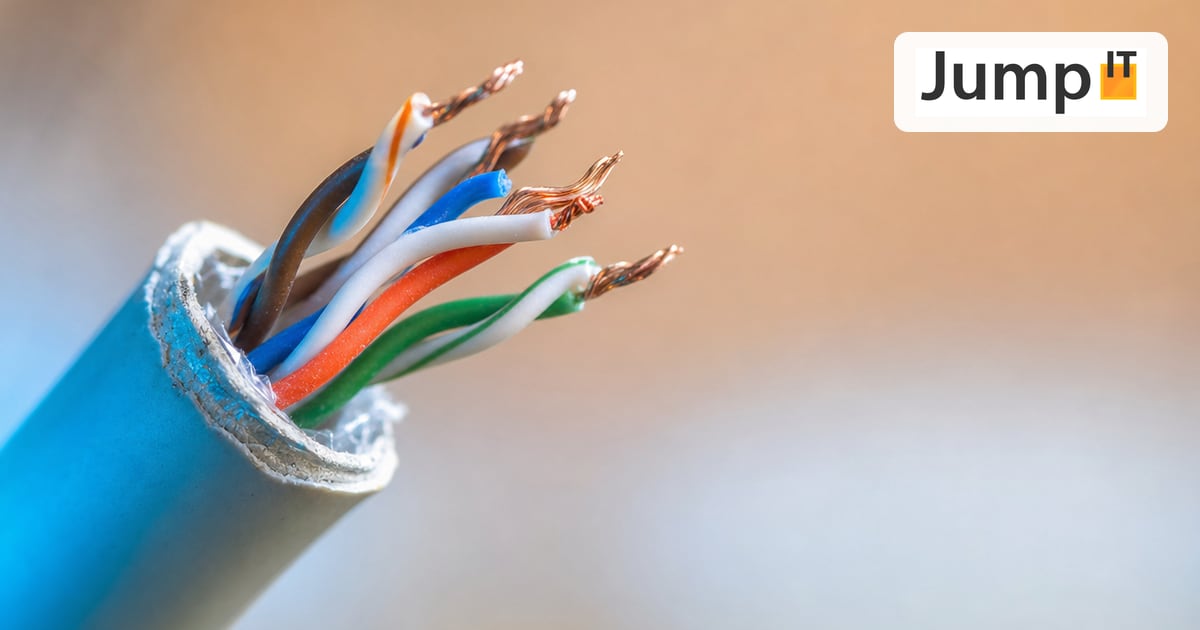
If you install network cables or have trouble with unstable connections, sooner or later you’ll come across the term crosstalk. It sounds technical, but it’s quickly explained, and in practice it matters more than many people think.
What is crosstalk?
Crosstalk refers to unwanted interference inside a network cable. An electrical signal “jumps” from one wire pair to a neighboring pair. The cause is the electromagnetic fields that build up during data transmission, especially at high speeds.
In short:
One signal affects another, even though it shouldn’t.
Why does crosstalk occur?
Network cables consist of several twisted wire pairs. When data is transmitted, electrical fields are created. If the wires are too close together or the twisting is inadequate, these fields can influence each other.
Typical factors are:
-
high data rates (1 Gbit/s, 10 Gbit/s and more)
-
poor-quality or incorrectly installed cables
-
long cable runs
-
strong external sources of interference (power lines, appliances, machinery)
What effects does crosstalk have?
Crosstalk isn’t a theoretical problem, it shows up very concretely in everyday use:
-
reduced transmission speed
-
packet loss
-
dropped connections
-
an unstable network despite “good” hardware
These problems are often hard to pin down, because they occur sporadically and don’t immediately point to the cable.
How is crosstalk reduced?
Modern network technology has solutions for exactly this:
Twisting of the wires
Twisting the wires in pairs is the first line of defense against crosstalk. The better and more even the twisting, the lower the interference.
Higher cable categories
Cables such as Cat6, Cat6A or Cat7 are designed to reduce crosstalk significantly, thanks to more precise manufacturing and better materials.
Shielding
Shielded cables (e.g. F/UTP, F/FTP) offer additional protection against:
-
internal crosstalk
-
external electromagnetic interference
Important: shielding only works with proper grounding.
Bottom line
Crosstalk is one of the most common causes of unexplained network problems. It arises inside the cable and increases with higher data rates and poor cabling. If you want to run stable, high-performance networks, you can’t get around high-quality cabling and a clean installation.
Especially in new builds, renovations and professional networks, the cable often decides the quality more than the switch or router.
More articles
 Networks Retrofitting Network Cable: Is It Worth It?
Pros and cons of retrofitting network cable, the realistic effort, and how we find existing conduits with the Kati® Blitz Ortung 2.0 without opening the wall.
 Networks Fiber Types: OM1 to OM5, OS1/OS2, G.652.D and G.657
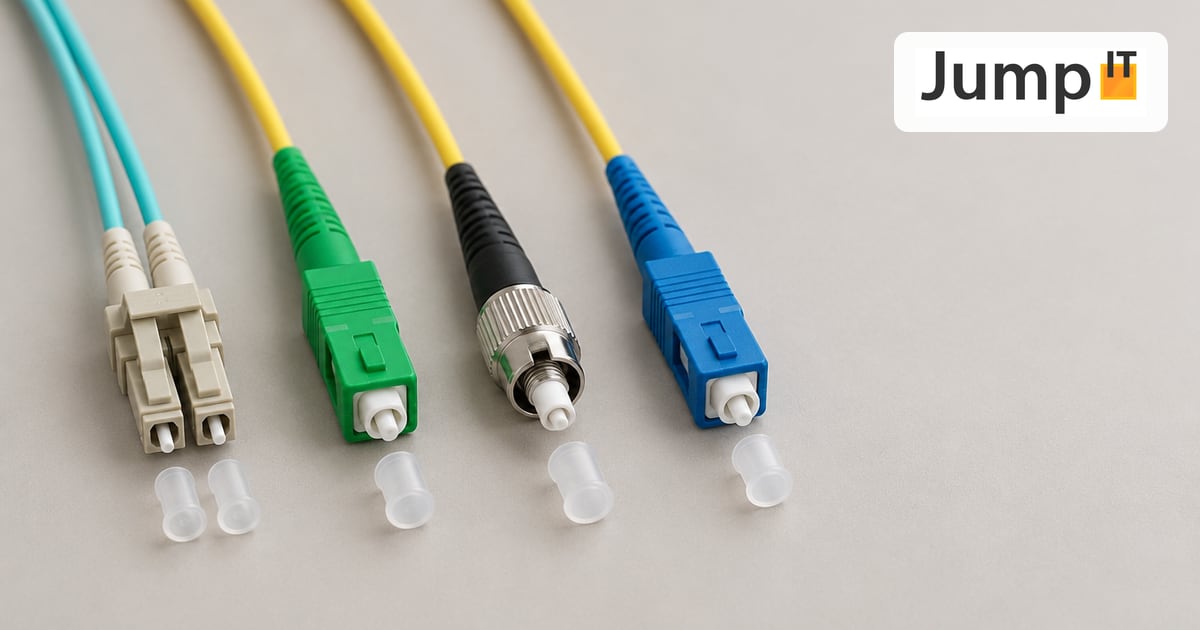
Multimode or singlemode? OM1 to OM5, OS1 and OS2, G.652.D and the bend-insensitive G.657.A1/A2 explained, with ranges, colors and an overview of SC, LC, FC, ST, E2000 and MPO connectors.
 Networks Fiber Optic Color Codes: Fiber Order Explained Simply
Red, green, blue or blue, orange, green? DIN/IEC 60304 vs. TIA-598 color codes, counting from fiber 13, loose tubes and connector colors, with tips for splicing and patching.
 Networks GPON and XGS-PON: What’s Behind Your Fiber Connection?
GPON or XGS-PON? How both fiber technologies work, what 1 and 10 Gbit/s really bring, which providers in Spain use what and where things stand on Mallorca.
Note: images and parts of the text on this page were created with the help of artificial intelligence and editorially reviewed by JumpIT.
← To the knowledge center