
Fiber in Spain: Movistar, Orange, Vodafone, IBRED & Connectabalear
What is fiber and how does it work?
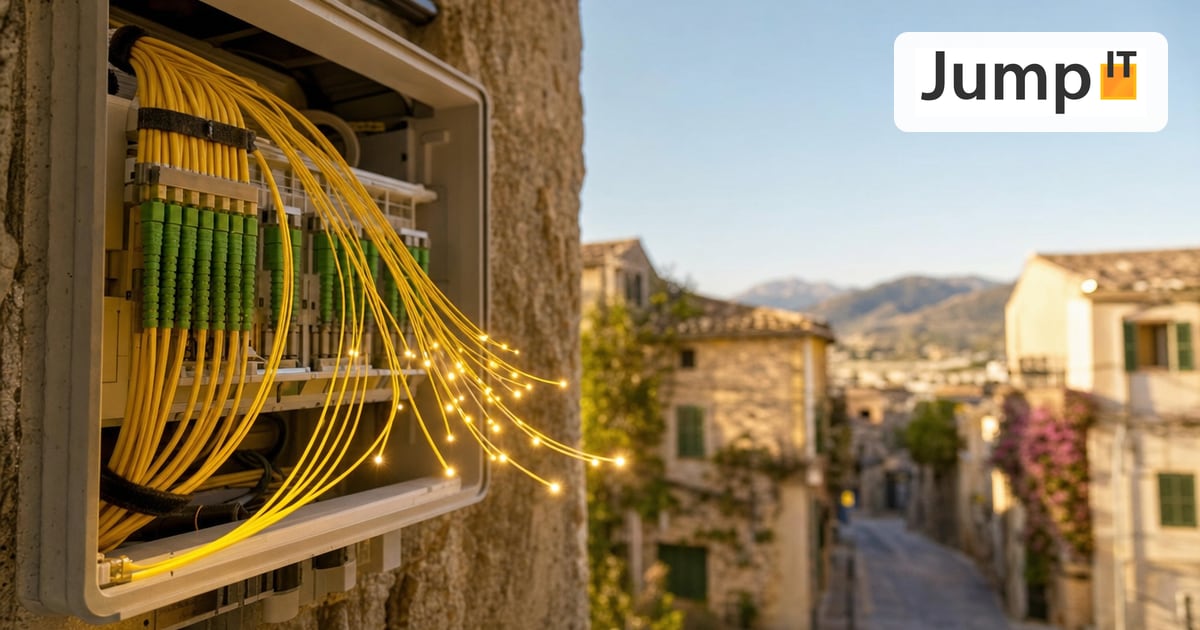
Fiber (or Fiber-to-the-Home, FTTH) is a broadband technology that enables extremely fast data transmission. Information is transmitted by light signals in thin fibers of glass or plastic. Fiber technology differs from conventional copper cables in the way it transmits: while electrical pulses in copper cables are limited by the properties of the material, light transmission in glass fibers enables high speeds and nearly lossless signal transmission over long distances. This technology is especially efficient for high bandwidth and stable connections.
Which wavelengths are used in fiber connections?
Fiber technology uses specific wavelengths to optimize performance and minimize signal loss. The two most common wavelengths are:
- 1310 nm: Often used for upstream (upload). This wavelength is less sensitive to certain attenuation factors and works well for shorter distances.
- 1550 nm: Often used for downstream (download). This wavelength is suited to long distances and is less prone to scattering losses, which makes it ideal for receiving large amounts of data.
Which wavelengths does Movistar use?
Movistar, one of the leading providers in Spain, typically uses the wavelengths 1310 nm for uploads and 1550 nm for downloads in its FTTH networks. These wavelengths are also used in GPON (Gigabit Passive Optical Network), a widespread fiber technology that gives end customers a shared line with high bandwidth. Splitting the wavelengths between the sending and receiving directions ensures high efficiency.
How does Movistar differ from other providers like Orange and Vodafone?
Movistar offers comprehensive FTTH coverage in Spain and is known for its stable and well-built infrastructure. Orange and Vodafone also work with GPON technology and comparable wavelengths (mostly 1310 nm and 1550 nm), but service quality can vary:
- Orange offers comparable coverage in urban areas and also uses GPON technology, but its network in rural areas is often less developed than Movistar’s.
- Vodafone also has strong FTTH coverage but focuses more on mobile networks and in some regions offers fiber alternatives (such as hybrid fiber-coaxial cable for DOCSIS connections) where pure fiber infrastructure isn’t available.
How do regional providers like IBRED and Connectabalear perform?
Regional providers like IBRED and Connectabalear have specialized in serving regions that are less well covered by national providers. Both have invested in their infrastructure in recent years to enable high speeds and stable connections in rural areas too.
- IBRED relies on a combination of fiber and wireless networks (Wireless Fibre) and often offers tailor-made solutions for remote areas where conventional fiber connections aren’t feasible.
- Connectabalear operates its own fiber network and offers competitive rates and good speeds. It also uses GPON technology, but the service level in remote areas may differ from that of the national providers.
What are the advantages of fiber over conventional DSL and coaxial connections?
- Higher speed: Fiber reaches bandwidths of up to 1 Gbit/s and more, while DSL and coaxial networks are generally slower.
- Stability: Fiber is less prone to interference and delivers stable performance regardless of the distance to the distribution point.
- Lower latency: Light transmission in glass fibers results in lower delays, which is especially beneficial for online gaming and real-time applications.
Summary: Which providers are ideal for which customer?
- Movistar: Ideal for customers who want high network stability and coverage across all of Spain.
- Orange and Vodafone: Also offer high speeds and coverage, but with occasional differences in rural areas.
- IBRED and Connectabalear: Offer a good alternative in areas that national providers don’t serve sufficiently, especially in the Balearic Islands.
Fiber from the pros: Router, splicing and WiFi on your property: Fiber on Mallorca
More articles
 Networks Retrofitting Network Cable: Is It Worth It?
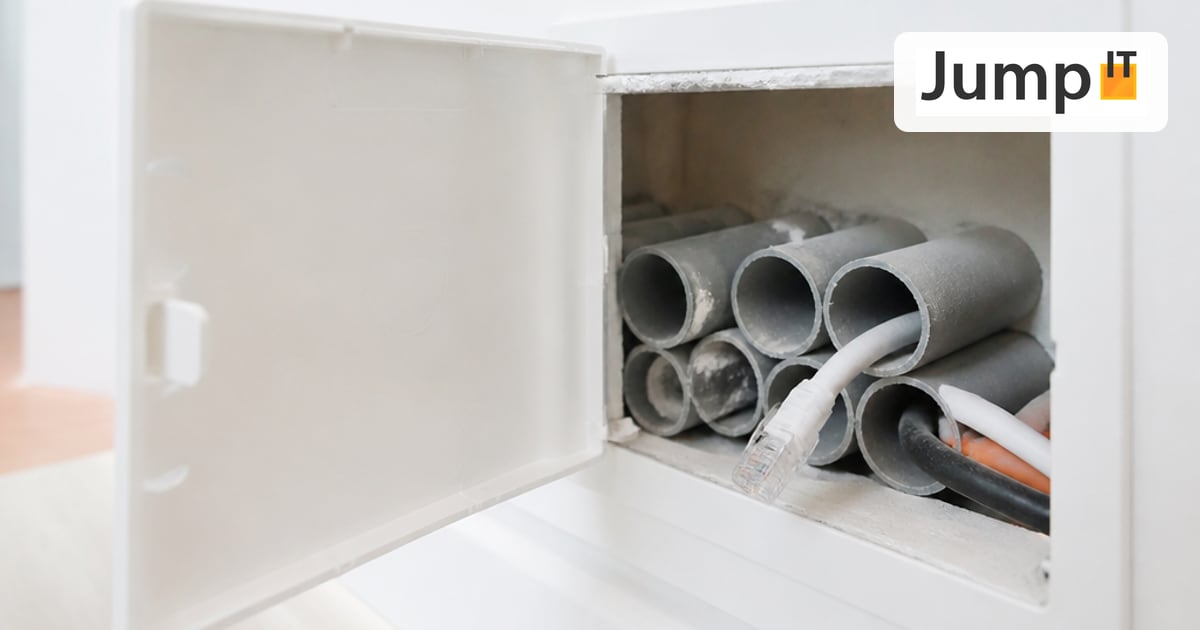
Pros and cons of retrofitting network cable, the realistic effort, and how we find existing conduits with the Kati® Blitz Ortung 2.0 without opening the wall.
 Networks Fiber Types: OM1 to OM5, OS1/OS2, G.652.D and G.657
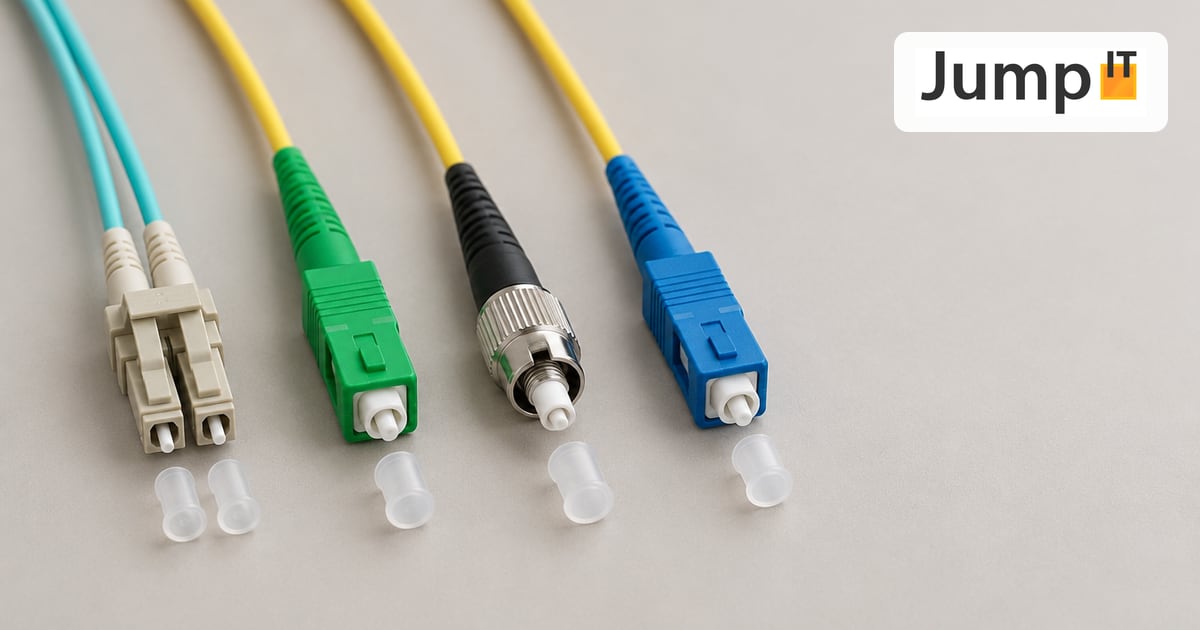
Multimode or singlemode? OM1 to OM5, OS1 and OS2, G.652.D and the bend-insensitive G.657.A1/A2 explained, with ranges, colors and an overview of SC, LC, FC, ST, E2000 and MPO connectors.
 Networks Fiber Optic Color Codes: Fiber Order Explained Simply
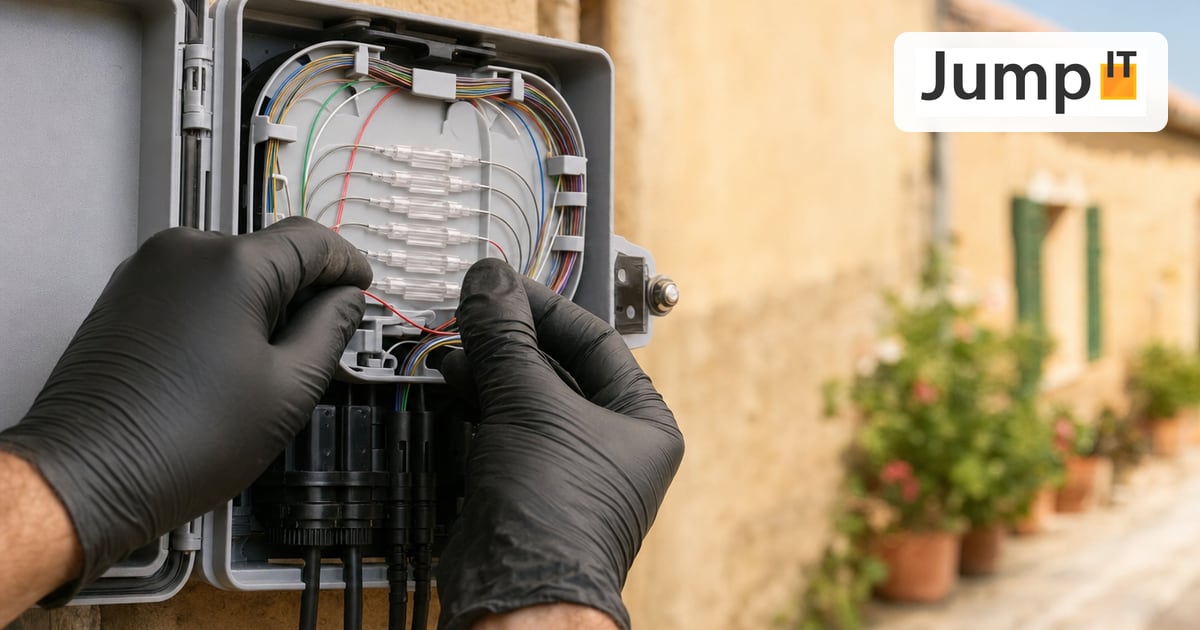
Red, green, blue or blue, orange, green? DIN/IEC 60304 vs. TIA-598 color codes, counting from fiber 13, loose tubes and connector colors, with tips for splicing and patching.
 Networks GPON and XGS-PON: What’s Behind Your Fiber Connection?
GPON or XGS-PON? How both fiber technologies work, what 1 and 10 Gbit/s really bring, which providers in Spain use what and where things stand on Mallorca.
Note: images and parts of the text on this page were created with the help of artificial intelligence and editorially reviewed by JumpIT.
← To the knowledge center