
Ethernet Cables and Their Abbreviations
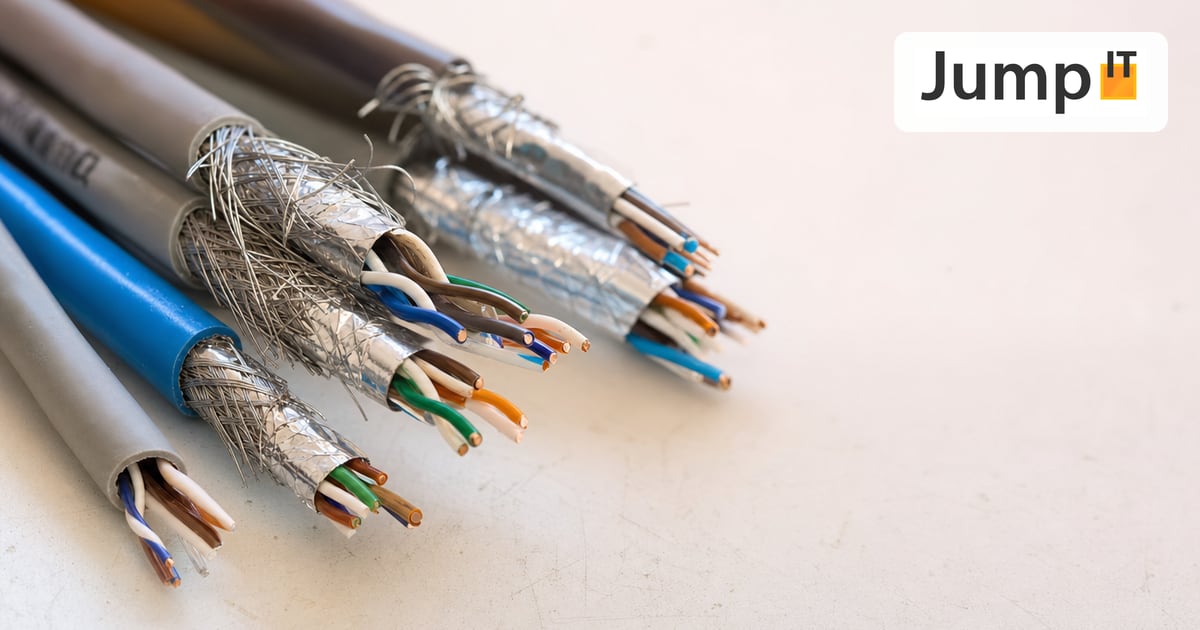
Here is a detailed explanation of the different Ethernet cable grades and what the abbreviations mean:
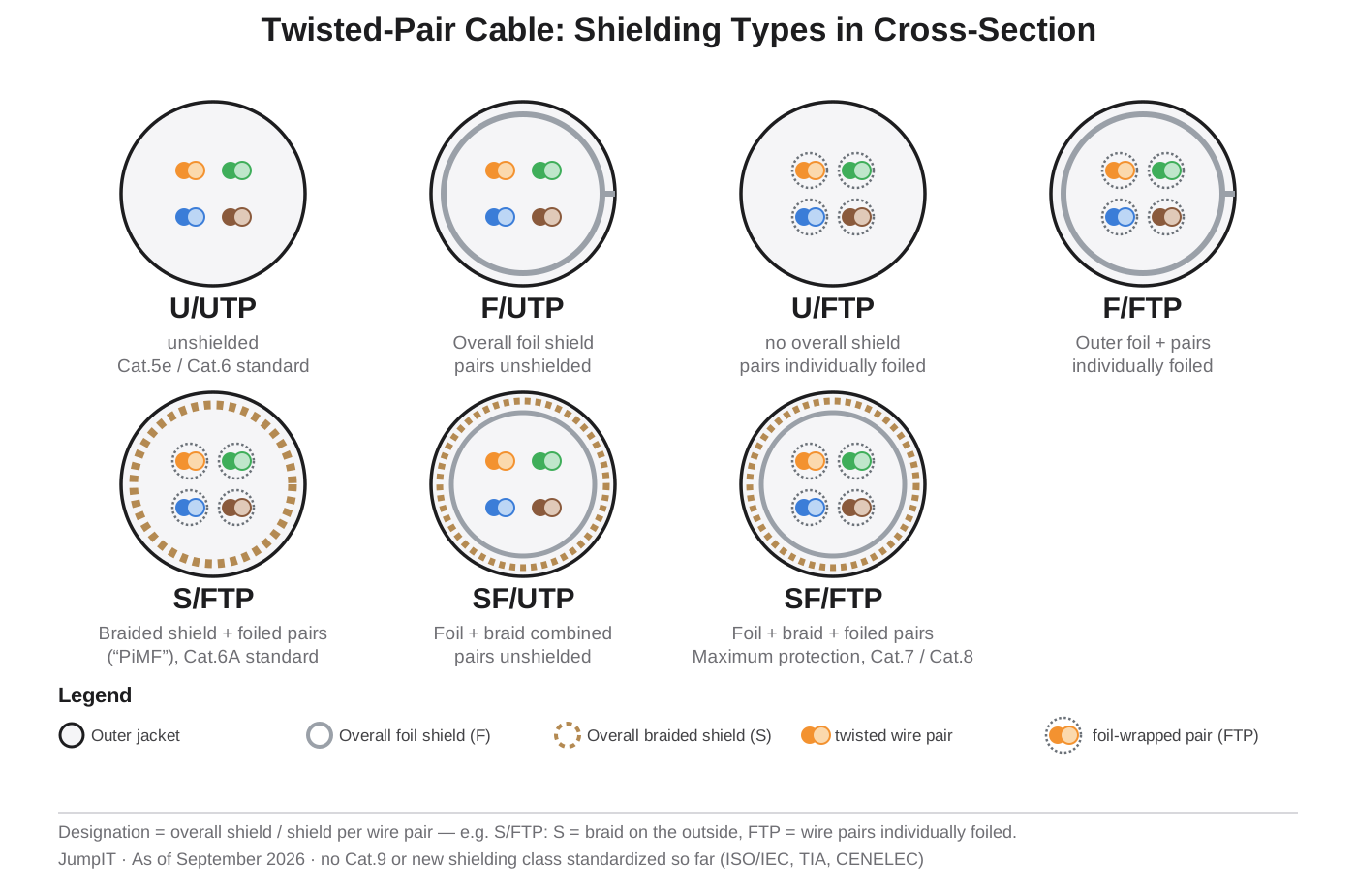
Unshielded twisted pair cables (UTP)
UTP cables have no additional shielding around the twisted wire pairs. They are susceptible to electromagnetic interference, but are commonly used in offices and residential buildings, where interference is low.
Shielded twisted pair cables
There are several types of shielding for twisted pair cables:
Foil shield (F/UTP, F/FTP):
- The twisted wire pairs are wrapped in a foil that acts as a shield
- F/UTP: overall foil shield, wire pairs unshielded
- F/FTP: overall foil shield, each wire pair individually wrapped in foil. Offers good protection against electromagnetic interference
Braided shield (S/UTP, S/FTP):
- A braid of copper wires surrounds the wire pairs and acts as a shield
- S/UTP: overall braided shield, wire pairs unshielded
- S/FTP: overall braided shield, each wire pair individually wrapped in foil (also called PiMF)
Very good shielding effect, but somewhat stiffer than foil shielding alone
Combined shielding (SF/UTP, SF/FTP):
- A combination of foil and braided shield for maximum shielding
- SF/UTP: overall shielding of foil + braid, wire pairs unshielded
- SF/FTP: overall shielding of foil + braid, each wire pair individually wrapped in foil
- Used for the highest demands on interference immunity, e.g. for Cat.7 and Cat.8
Cable categories
The categories specify performance characteristics such as frequency and transmission rate:
- Cat.5e: up to 1000 Mbit/s, 100 MHz
- Cat.6: up to 1000 Mbit/s, 250 MHz
- Cat.6A: up to 10 Gbit/s, 500 MHz
- Cat.7: up to 10 Gbit/s, 600 MHz
- Cat.8 (8.1 / 8.2): up to 40 Gbit/s, 2000 MHz — Cat.8.1 with RJ45 connectors (backward compatible with Cat.6A), Cat.8.2 with GG45 or TERA connectors
Higher categories generally also require higher-grade shielding such as S/FTP in order to minimize interference and reach the specified transmission rates.
Bottom line: for demanding networks with high transmission rates, we recommend at least Cat.6A with S/FTP (PiMF) shielding. For maximum performance up to 10 Gbit/s, Cat.7 with SF/FTP shielding is the best choice.
Is there a Cat.9 yet? No. As of September 2026, there is no category above Cat.8 that has been adopted or officially announced by ISO/IEC, TIA or CENELEC/EN 50173. The occasional “Cat.9” mention is manufacturer marketing, not a standard.
Sources:
- https://newlinko.com/de/differences-utp-ftp-stp-sftp-fftp-cables/
- https://www.soselectronic.com/de/articles/no-name/utp-ftp-s-ftp-eine-kleine-auffrischung-konnte-helfen-2033
- https://www.partsdata.de/Cat.6-Netzwerkkabel-PREMIUM-Qualitaet-S-FTP-PIMF-blau-2m/B6-BE-020
- https://www.kabelscheune.de/Cat-6-Kabel/Cat-6-Patchkabel-RJ45-LAN-Kabel-S-FTP-PIMF-gelb-20-m.html
- https://www.serverschrank24.de/wissensdatenbank/welches-kabel-muss-ich-waehlen.html
- https://www.serverschrank24.de/wissensdatenbank/warum-haben-unsere-cat7-kabel-cat6a-konnektoren.html
More articles
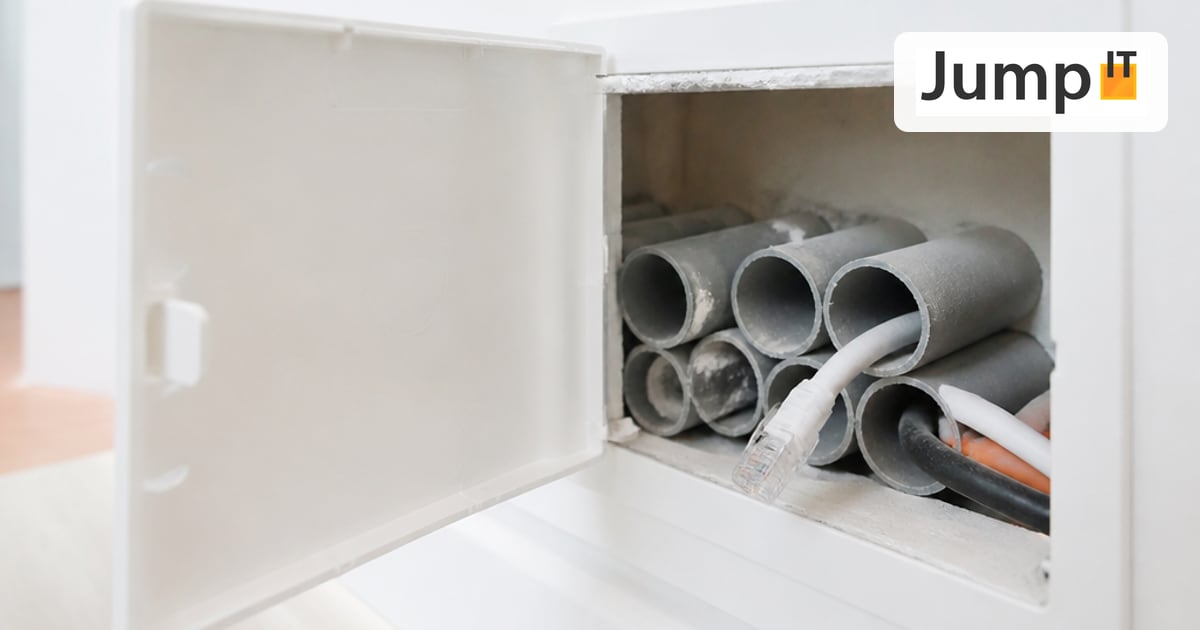 Networks Retrofitting Network Cable: Is It Worth It?
Pros and cons of retrofitting network cable, the realistic effort, and how we find existing conduits with the Kati® Blitz Ortung 2.0 without opening the wall.
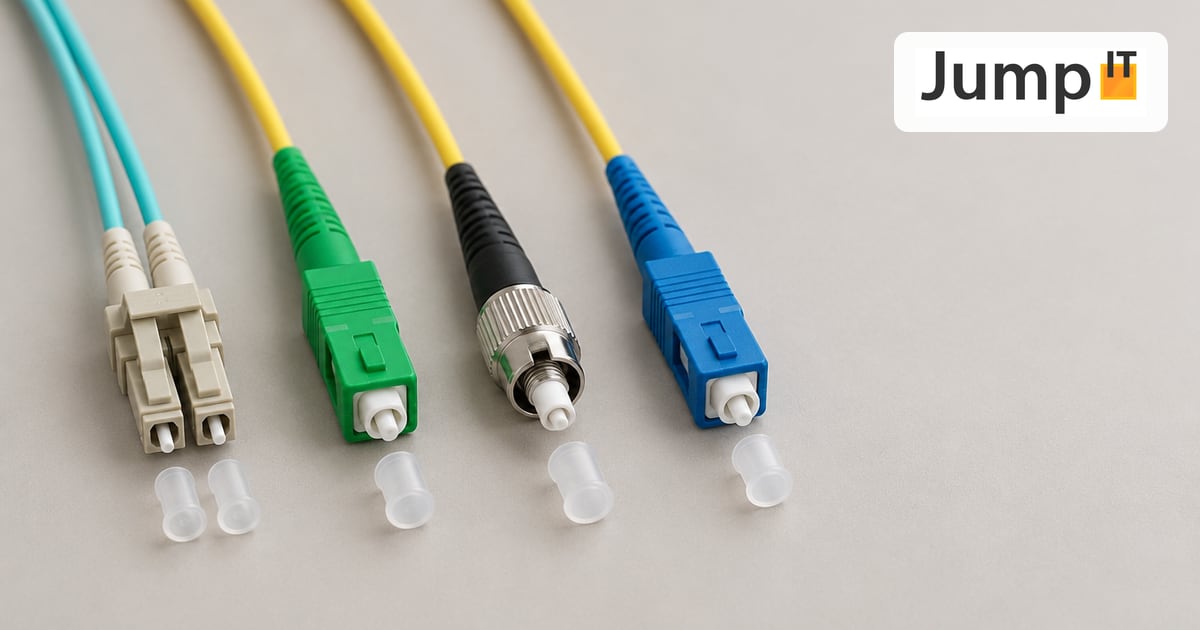 Networks Fiber Types: OM1 to OM5, OS1/OS2, G.652.D and G.657
Multimode or singlemode? OM1 to OM5, OS1 and OS2, G.652.D and the bend-insensitive G.657.A1/A2 explained, with ranges, colors and an overview of SC, LC, FC, ST, E2000 and MPO connectors.
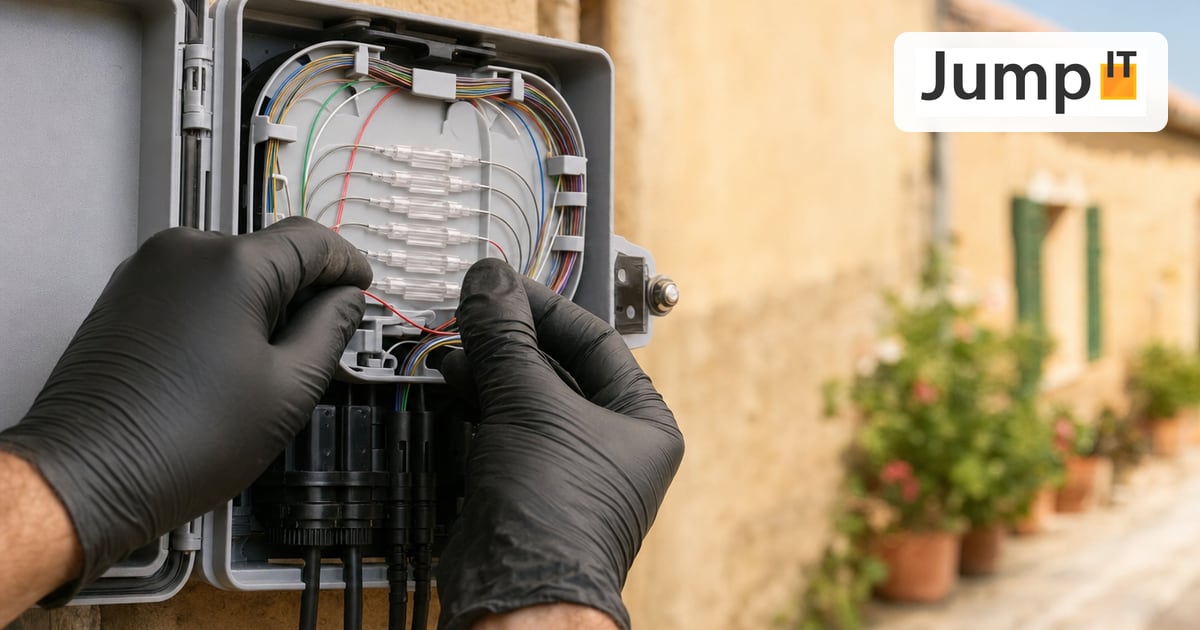 Networks Fiber Optic Color Codes: Fiber Order Explained Simply
Red, green, blue or blue, orange, green? DIN/IEC 60304 vs. TIA-598 color codes, counting from fiber 13, loose tubes and connector colors, with tips for splicing and patching.
 Networks GPON and XGS-PON: What’s Behind Your Fiber Connection?
GPON or XGS-PON? How both fiber technologies work, what 1 and 10 Gbit/s really bring, which providers in Spain use what and where things stand on Mallorca.
Note: images and parts of the text on this page were created with the help of artificial intelligence and editorially reviewed by JumpIT.
← To the knowledge center